
Workflow
How It Works
A four-step workflow that stays inside Revit.
Workflow
How it works
A four-step workflow that stays inside Revit.
-
Define
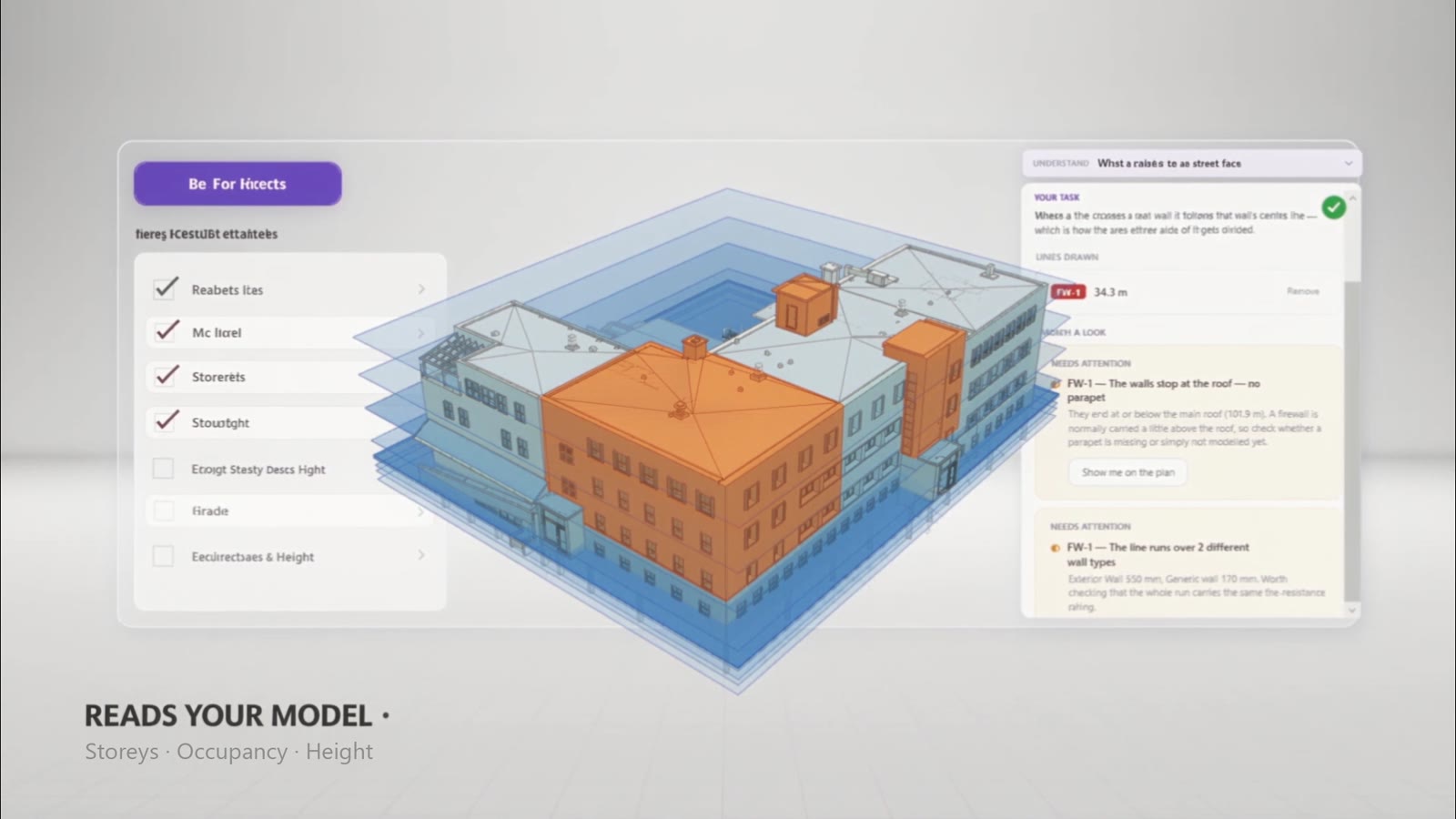
Confirm essential project and building information. Codex BIM pre-fills what it can read from the model — storeys, occupancy, height — and asks only for what is missing.
-
Review
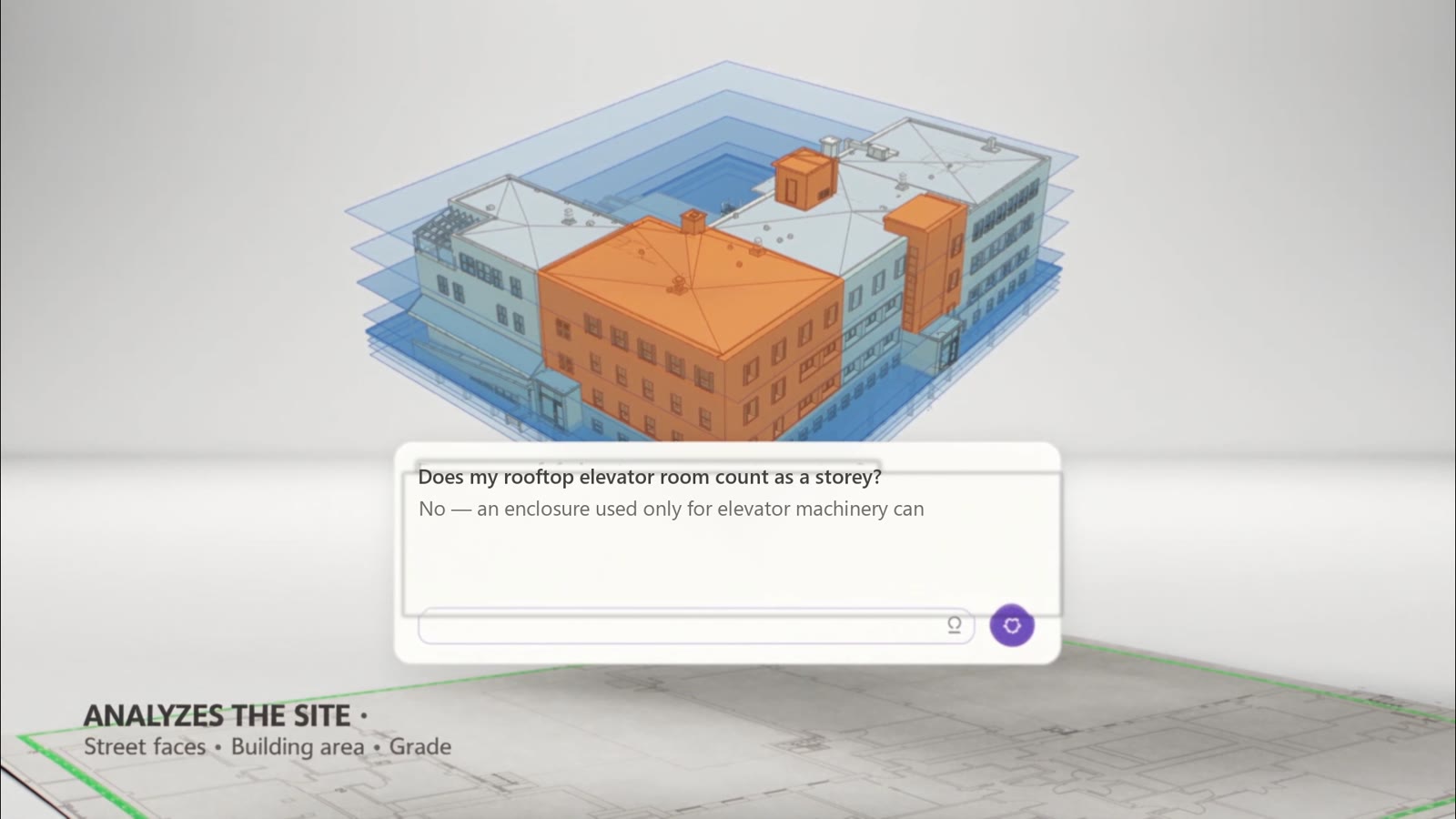
Work through the site and building conditions that determine which requirements apply: street faces, building area, grade and classification.
-
Check
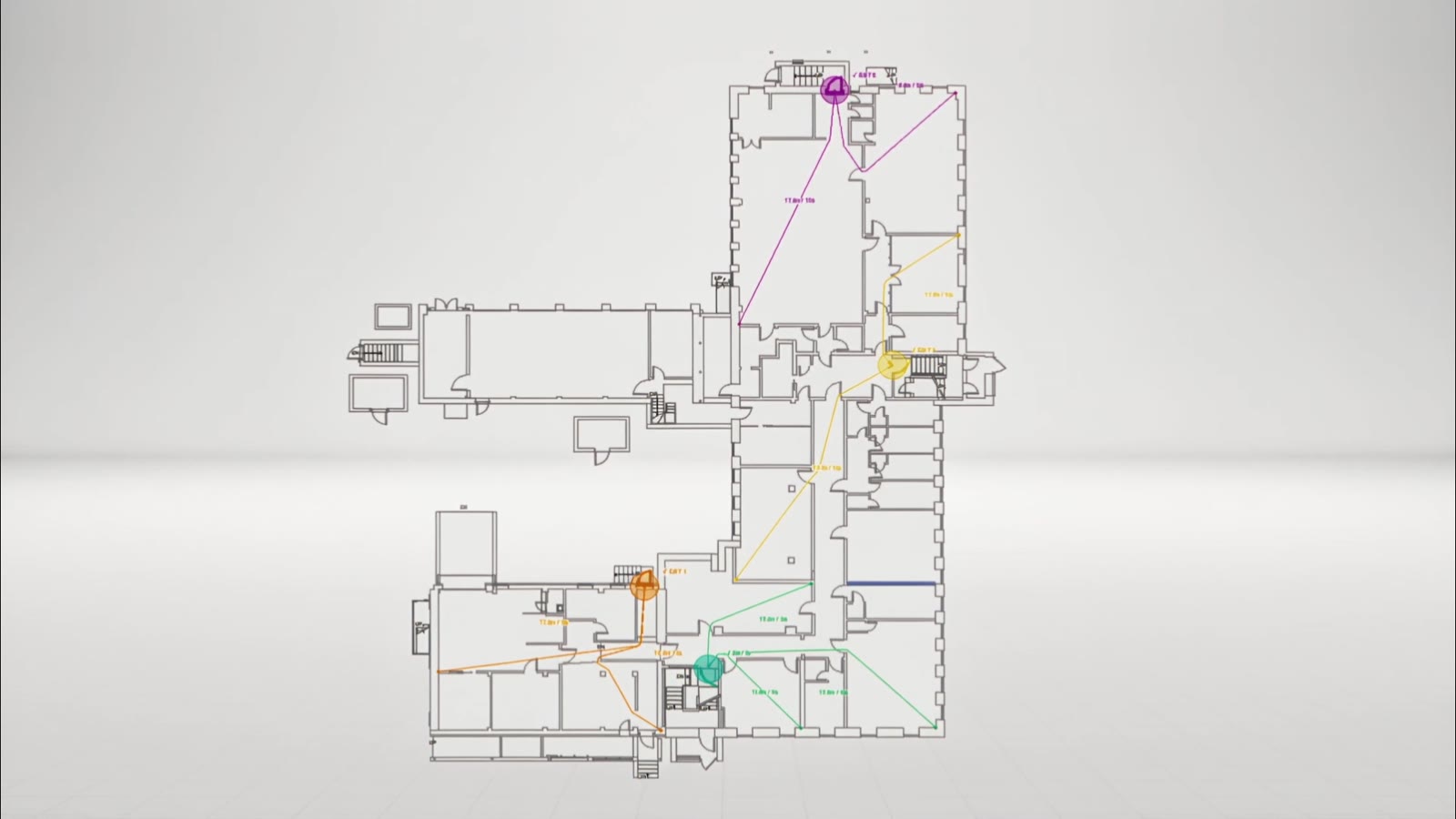
Run the supported checks against the active model, including egress paths and travel distances, and ask project-specific questions to the built-in assistant.
-
Resolve
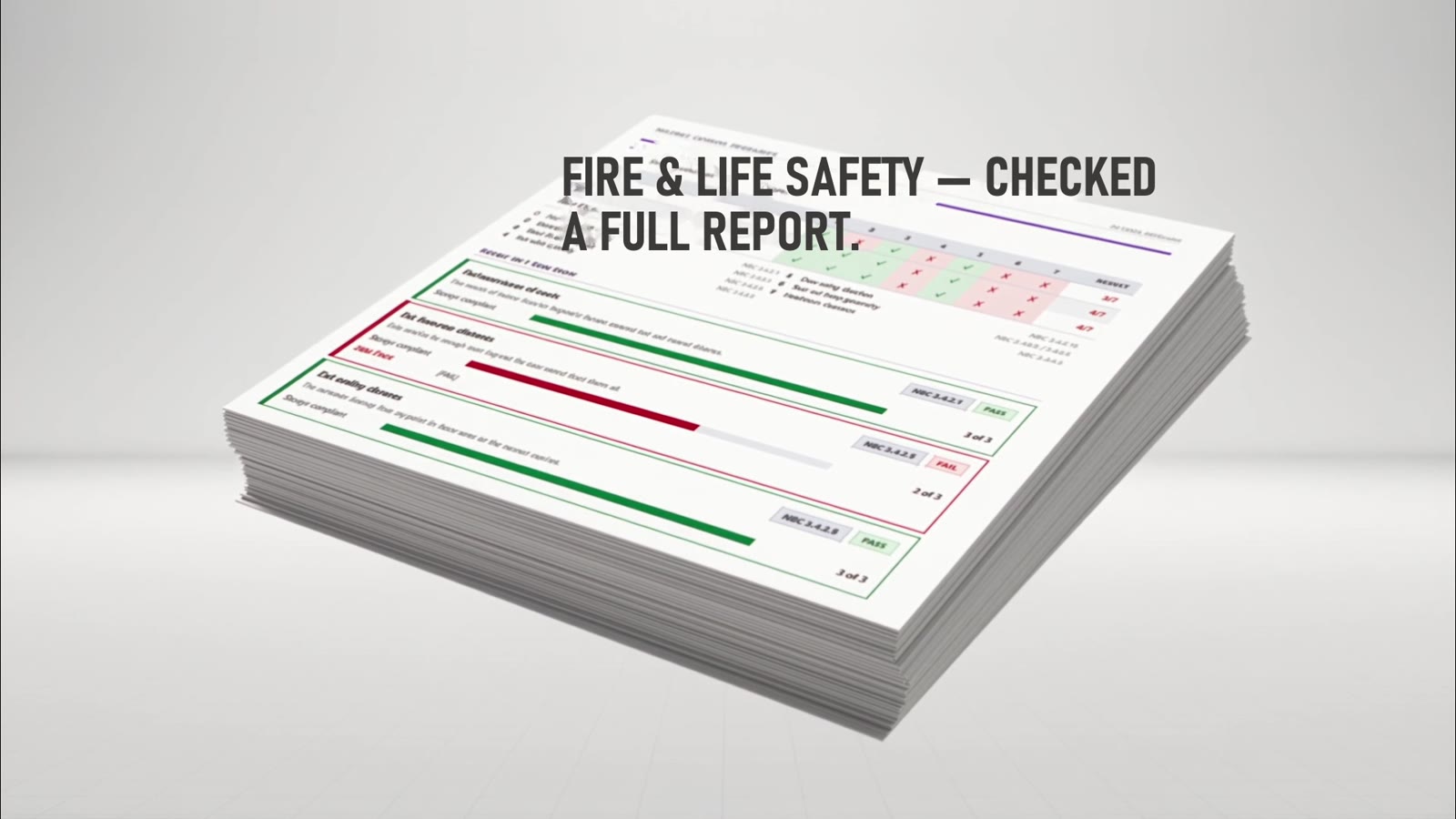
Review flagged conditions on the plan, adjust the design, and export a structured fire and life-safety report with pass / needs-attention results per requirement.
The challenge
Fire-code review is fragmented. The model already holds most of the answers.
Building height, storeys, occupancy, street faces, exits and travel distances are usually reviewed by hand, across drawings, spreadsheets and code books. The information exists in the Revit model, but connecting it to the applicable requirements is repetitive and easy to lose track of.
With Codex BIM
A structured review workflow, connected to your model
Codex BIM reads supported information from the active Revit model, guides you through the project conditions that drive the applicable requirements, runs the checks it supports and presents the results in one report — so your team spends its time on design decisions, not on re-collecting data.
- Reads storeys, occupancy and building height from the model
- Analyses site conditions such as street faces, building area and grade
- Answers project-specific code questions using the model context
- Highlights conditions that need attention and shows them on the plan
Product preview
See Codex BIM in action
This short preview shows how Codex BIM reads model information, analyses the site, answers project-specific code questions and produces a structured fire and life-safety report. The preview illustrates the product workflow; interface details may change before general availability.
- Reads your model – storeys, occupancy, height
- Analyses the site – street faces, building area, grade
- Assistant built into the workflow
- Fire and life safety checked – a full report
The preview has no narration. A transcript of the on-screen text is provided below.
Transcript
[Transcript placeholder – replace with the final narration or on-screen text.]
0:00 – Codex BIM logo.
0:03 – Fire-code review today: dense code text, time pressure and errors.
0:08 – Reads your model: storeys, occupancy, height.
0:13 – Analyses the site: street faces, building area, grade.
0:18 – Built-in assistant answers a project question: “Does my rooftop elevator room count as a storey?”
0:22 – Egress paths and travel distances shown on the floor plan.
0:24 – Fire and life safety checked — a full report.
0:27 – Codex BIM.
FAQ
Frequently asked questions
What is Codex BIM?
Codex BIM is a plugin for Autodesk Revit that helps AEC professionals review supported fire and life-safety code requirements using information from their Revit project. It reads model information, guides you through the conditions that determine which requirements apply, runs the checks it supports and produces a structured report.
Who is Codex BIM designed for?
Architects, architectural technologists, engineers, BIM managers and coordinators, VDC teams, Revit specialists, code consultants, fire and life-safety reviewers, and design or compliance managers in AEC firms.
How does Codex BIM work with Revit?
Codex BIM installs as a Revit add-in and runs inside Revit. It reads supported information from the active model (for example storeys, occupancy, height and site conditions), lets you confirm project inputs, runs its checks and shows results in the plugin panel and on the plan. The model itself is not modified by the checks.
Which jurisdictions are supported?
The initial focus is Quebec (Beta). Ontario, other Canadian provinces and territories, the United States and international code frameworks are planned and are not available in the current product. The roadmap on the homepage shows the current status of each jurisdiction.
Does Codex BIM guarantee code compliance?
No. Codex BIM is a professional assistance and review tool. It supports the review of selected fire and life-safety requirements and helps identify potential issues; it does not check every applicable requirement, does not guarantee compliance or approval, and does not replace the judgment of qualified professionals or the authority having jurisdiction.
Does Codex BIM replace a code consultant?
No. Codex BIM gives architects, engineers and code consultants structured model data and a repeatable workflow so they can focus their expertise on interpretation and the conditions the tool flags. Professional review remains essential.
Can firms purchase team licences?
Team and Enterprise plans are intended for project teams, BIM departments and multidisciplinary firms. Pricing and terms are being finalised; contact us for organisation-level licensing.
Bring fire-code review into your Revit workflow
Codex BIM is in early access. Tell us about your practice and the jurisdictions you work in, and we will be in touch.